
Features Overview
Audio Interfaces for your Computer
Computers come with lousy sound cards and, at best, a 1/8” stereo minijack for a microphone line in. Your phone is no better, and actually a whole lot worse if you’re just recording your voice or instrument along with all the ambient sound in the room around you. If you are interested in investing a little bit in some tech that will step up your recording game, here are some recommendations.
The list below is just the interfaces themselves. But the other equipment you need to record (mics, cables, stands) can be borrowed from the church for this season if you’re going to be recording for worship teams purposes.
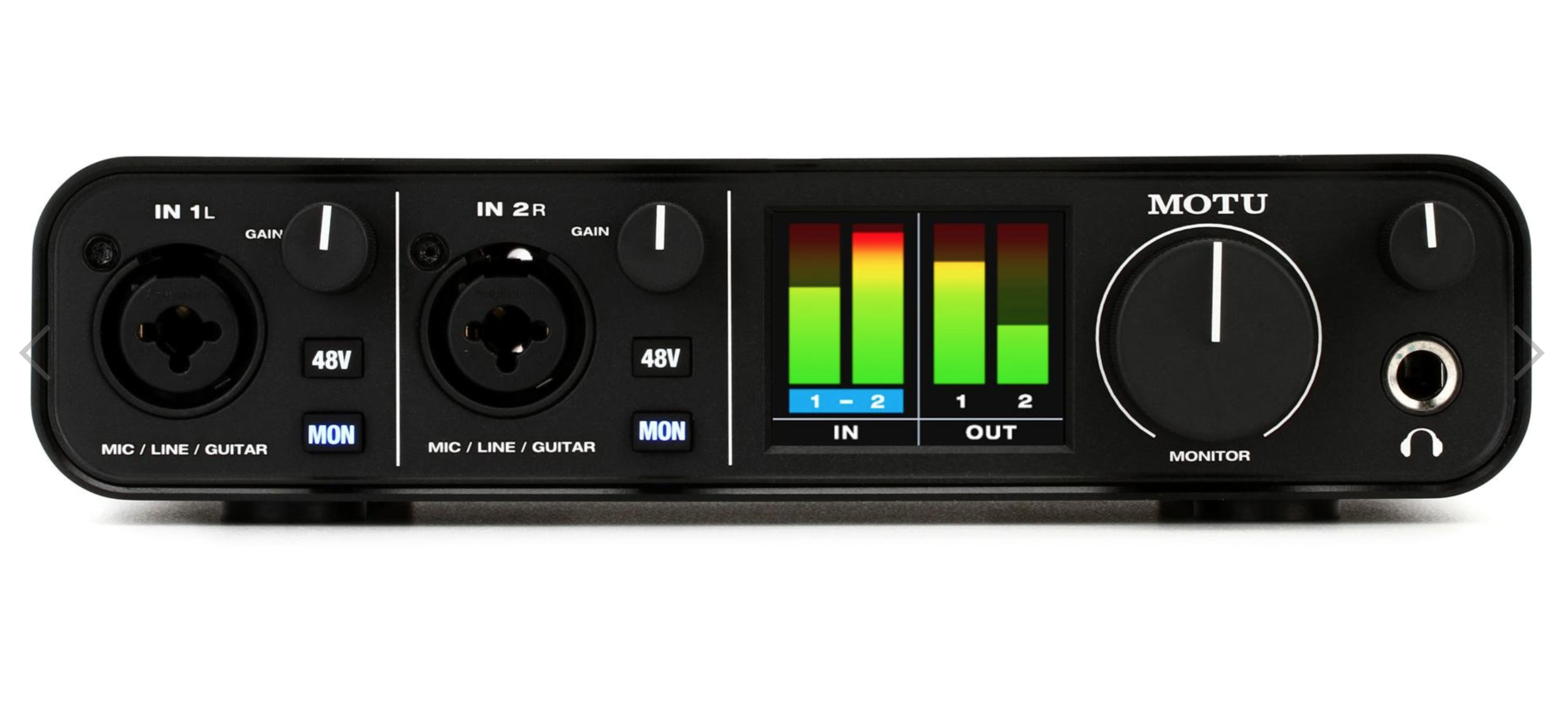
Motu M2
I have the M4 version of this interface (four channels instead of two), and it’s amazing. It’s the most expensive of the bunch, but I paid the extra for the mic preamps and the metering. The inputs are combination connectors, so they can handle an XLR cable from a good mic, or a 1/4” from a guitar. It also has MIDI in/out for piano, which is a huge plus in my books.
This unit has the best metering out there, and that’s crucial for the kinds of things we’re doing, where everyone is listening or watching on their own devices. Also, the M-series of interfaces was just released this year. This means it’s a USB-C interface (with a cable that drops it back to the USB-A-type connector). It will be supported for years and years to come.
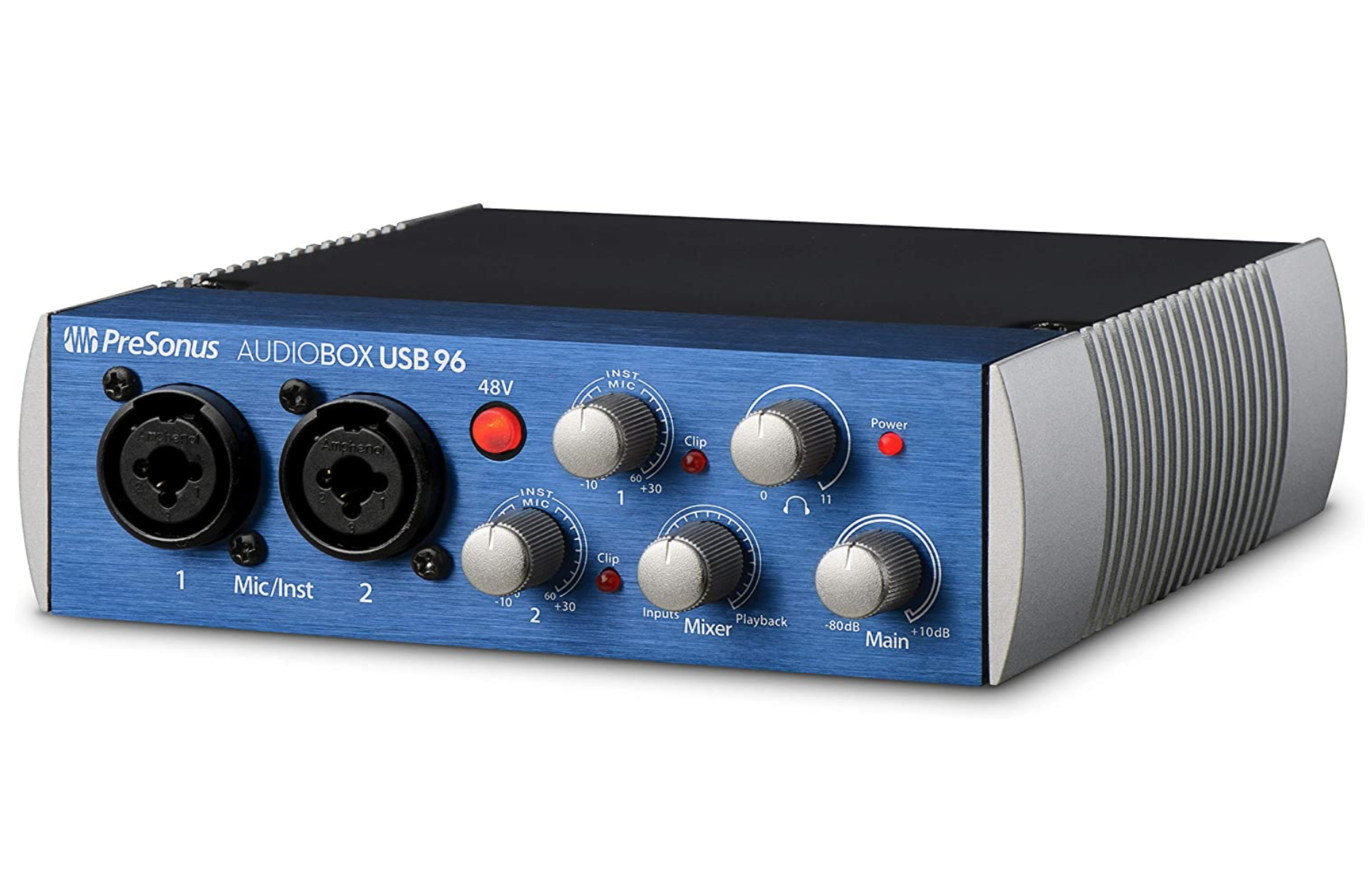
PreSonus AudioBox USB 96
PreSonus is a great company, a little below MOTU, but still a worthy entry into the interface category. Our old FireWire interfaces for the soundboard with which we recorded that worship “album” with Tiffany and Michael and that crew were made by PreSonus, and they were only recently deprecated. The preamps here are fine, and you can see it has the same two combination inputs. It also has a MIDI in / out on the back, just like the MOTU above.
But there’s a noticeable lack of metering. Instead of getting a smooth, graduated metering display, you get a single LED for each channel to indicate when your signal “clips” — or is too high for recording without distortion. In some ways, this is all anyone really cares about. Turn up the gain until the red light clips at your loudest part of the song, and then back it off a hair. So it would work fine. I just like more info. But you don’t need the expensive MOTU. This one is still great.

Behringer U-Phoria UM2
Behringer is hit or miss with their quality. They’re a company in Germany that reverse engineers products from other manufacturers, and then mass-produces a cheaper version. I’ve had great success with them in some cases (the big 32-channel sound board we used to have was a Behringer, and it was flawless); other times not so much (the powered speakers we’re using for the drum monitor and the bass guitar monitor are both Behringer B-112Ws, and one just won’t turn on anymore). But this little box has only one combination input and the second input is 1/4”. It also only has a “clip” indicator. But it would totally do the job if you were just recording a voice…
Sweetwater.com
$48.00
(currently unavailable)
Cables
There are also a number of other options out there that are just cables that go from your guitar or piano to a USB input — these do not provide an additional sound card — and the soundcards in laptops and computers are typically of very low quality. But it could get the job done. I don’t use them, but they might work. You could try one, and just use your computer’s native sound card. That’s probably good enough for our purposes.
Direct to Device
And then there’s the worst option: just recording on your iPhone or Android device. The audio that will come from this will be super-reverby, or have a ton of background noise or hum, and require a lot of post-production with noise reduction effects to make them useable. IT IS STILL POSSIBLE to use them. Just by using a set of headphones that have a mic in the cable is a huge step up from just recording your voice or instrument in a room.